
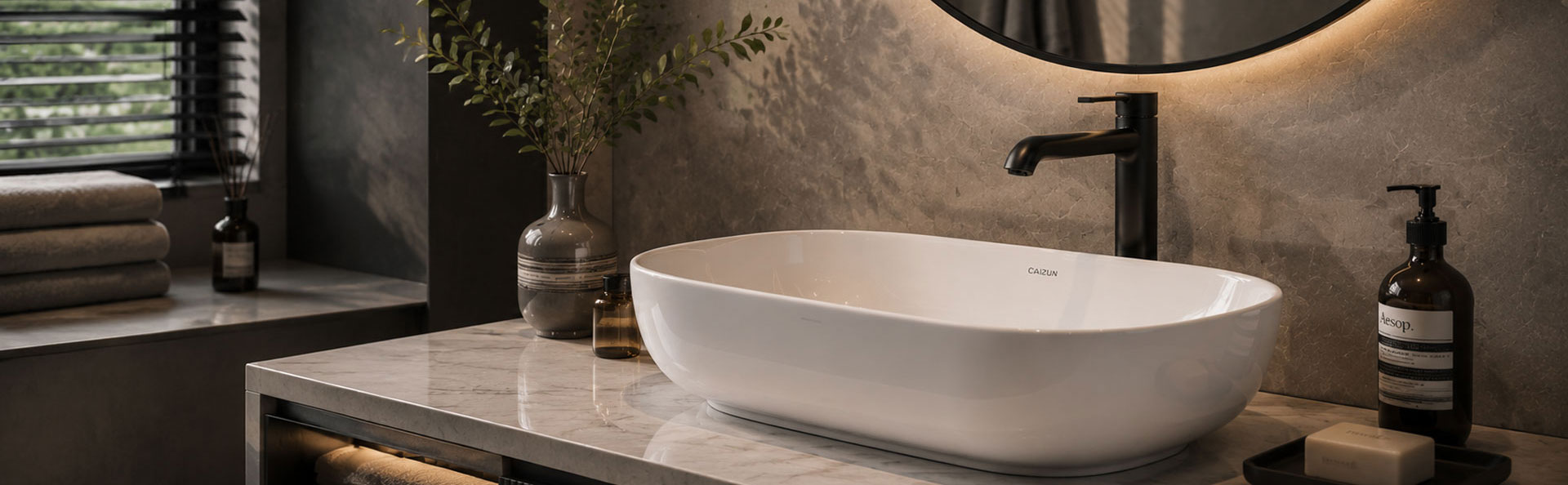
A matching bathroom faucet collection should create a consistent visual identity across basin faucets and shower systems without sacrificing the practical requirements of each product. Matching does not mean every faucet must have the same shape or operating mechanism. Instead, the collection should share recognizable design elements, such as handle geometry, finish, edge profiles, and proportions, while allowing each product to function appropriately in its intended location. A well-planned collection also needs consistent technical specifications, manageable finish options, and a development process that supports repeat production. These considerations help turn individual products into a coordinated range suitable for different bathroom layouts.
Start with a Common Design Language
Before selecting individual models, define the visual principles that will connect the collection. This may include rounded or angular forms, slim handles, geometric spouts, or a particular metallic finish.
A useful design brief should specify:
Shape and proportion: Define the main body profile, handle style, and preferred visual weight.
Finish palette: Identify the core finish and any approved secondary options.
Design details: Establish shared features such as edge treatments, decorative lines, or handle accents.
Product positioning: Decide whether the range is contemporary, traditional, minimalist, or designed for another clear market segment.
The aim is to establish enough consistency for customers to recognize the collection without forcing identical proportions onto products with different technical requirements.
Which Products Should Be Developed Together?
A coordinated range can begin with a small group of products that share the strongest design elements.
| Product | Main design consideration | Technical requirement |
|---|---|---|
| Basin faucet | Handle shape, spout profile, and finish | Basin mounting dimensions and outlet geometry |
| Concealed shower set | Control appearance and visible trim | Valve compatibility and access requirements |
| Exposed shower faucet | Handle and body proportions | Wall connections and installation clearance |
| Bathtub faucet | Spout shape and handle coordination | Tub configuration, reach, and water delivery |
| Matching accessories | Finish and visual details | Compatibility with the specified installation |
Not every collection needs all these products at launch. Starting with a focused selection can make development and quality control easier while leaving room for later expansion.
How Can Visual Consistency Be Maintained?
The same finish name does not always produce the same appearance across different products. Base materials, surface preparation, geometry, and finishing processes can influence color, gloss, and texture.
To avoid visible mismatches, establish an approved physical reference sample and a written finish specification. Review representative samples from the basin and shower ranges together under consistent lighting.
Handle design also needs careful coordination. A basin faucet may use a compact single lever, while a shower system may require separate controls or a larger operating mechanism. Their proportions can differ, but shared design details can preserve the collection's identity.
How Should Technical Requirements Be Standardized?
Visual matching should never override functional compatibility. Each product needs its own technical specification, including dimensions, materials, cartridges or valves, connections, mounting requirements, and applicable performance criteria.
Where suitable, shared components can simplify spare-parts management and reduce unnecessary variation. However, components should only be standardized when they meet the functional and dimensional requirements of each product.
A Bathroom Brand Supplier should also document approved substitutions and changes. Replacing a cartridge, modifying a finish process, or changing a connection can affect product performance even when the external appearance remains similar.
How Can the Collection Be Developed Efficiently?
A structured development process helps keep design, manufacturing, and quality requirements aligned.
Create the design brief: Define the visual direction, target price positioning, and initial product assortment.
Review technical feasibility: Confirm dimensions, components, materials, and manufacturing constraints.
Develop representative samples: Check the basin and shower products together for visual coordination.
Validate performance: Test each product according to its intended function and applicable requirements.
Approve specifications: Record the final drawings, components, finishes, and packaging.
Plan future expansion: Add models or finishes only when they support the collection's direction and operational needs.
This sequence helps identify incompatibilities before production and reduces unnecessary revisions.
How Can a Matching Collection Remain Practical Over Time?
The collection should be designed for both visual continuity and ongoing product management. Retaining approved samples, technical drawings, finish references, and component specifications makes it easier to reproduce the same appearance in later orders.
It is also useful to maintain a clear distinction between core models and optional variations. A focused range of finishes and shared components, where technically appropriate, can simplify inventory and spare-parts planning without limiting meaningful design choices.
A successful matching bathroom faucet collection combines recognizable styling with independently validated product performance. Coordinating the design language, finish specifications, installation requirements, and production controls from the beginning makes the range more cohesive, easier to maintain, and more consistent across future releases.